
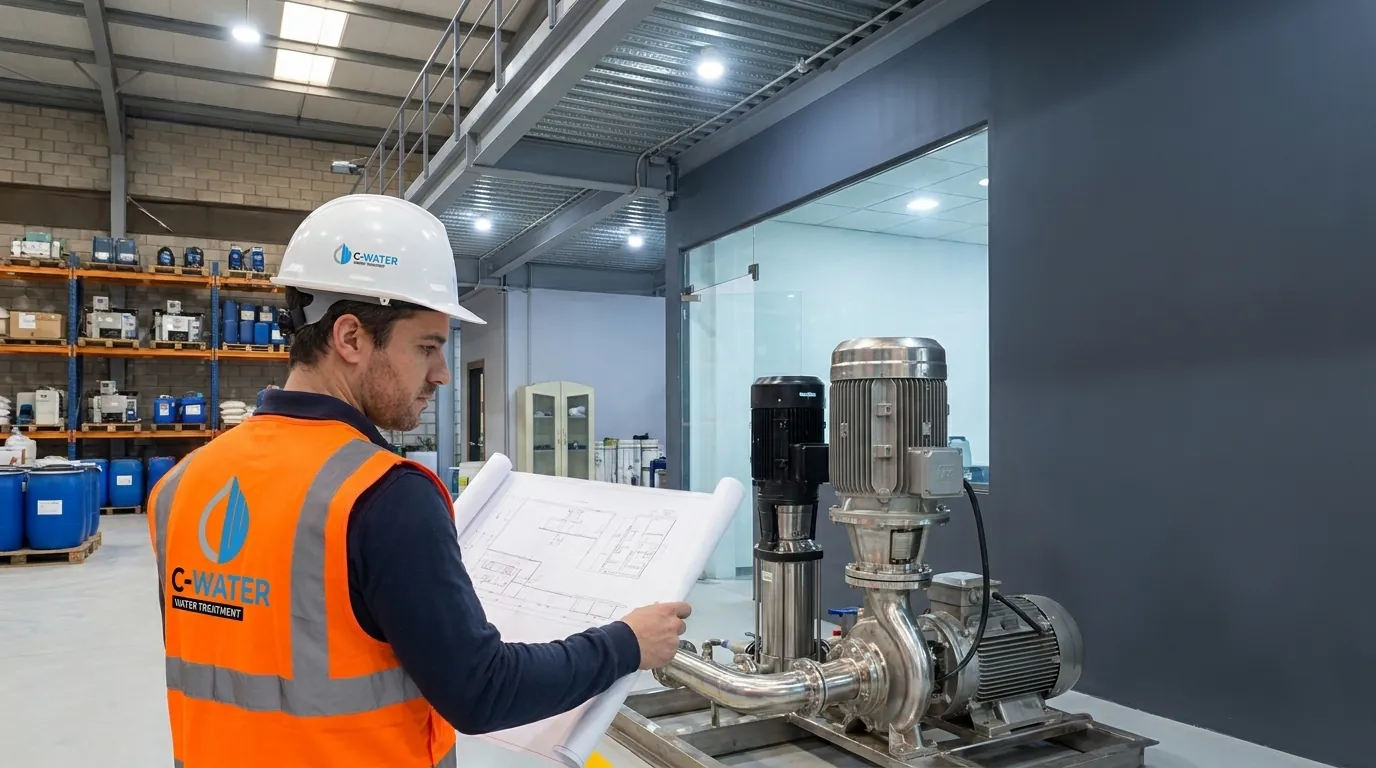
Engineering & System Integration
The Part That Makes the Rest Work Together.
Most water systems are assembled from good components that were never asked to work together. Integration is the discipline of deciding sequence, interfaces and responsibility before anything is installed.
01What It Solves
The Problem It Addresses.
Interfaces are where systems fail. A filter that backwashes into a line the controller is measuring, a dosing point too close to a sample point, a pump sized for a chemical that was later changed — none of these are component faults.
02How It Works
How It Actually Works.
- 01
Treatment sequence
What is removed first changes what the next stage has to handle. Getting the order right is usually cheaper than getting the equipment bigger.
- 02
Hydraulic reality
Available head, turndown, backwash demand and the effect of an automatic clean cycle on the rest of the circuit all have to be checked against the actual pump curve, not the nominal duty.
- 03
Control interfaces
Which device owns which decision, what happens on a lost signal, and how the treatment system reports to the plant’s existing supervision — decided in design, not on site.
- 04
Documentation and handover
Setpoint records, control philosophy, test values and a clear operating description. A system nobody can explain in two years is a system that will be run on defaults.
03Applications
Where It Is Used.
- New treatment plant design
- Retrofit and upgrade
- Multi-technology integration
- Capacity or process change
Related Solutions
Related Services
Related Knowledge
Is this the right technology for your system?
That question is answered by the water analysis and the operating conditions, not by a catalogue. Start there.