
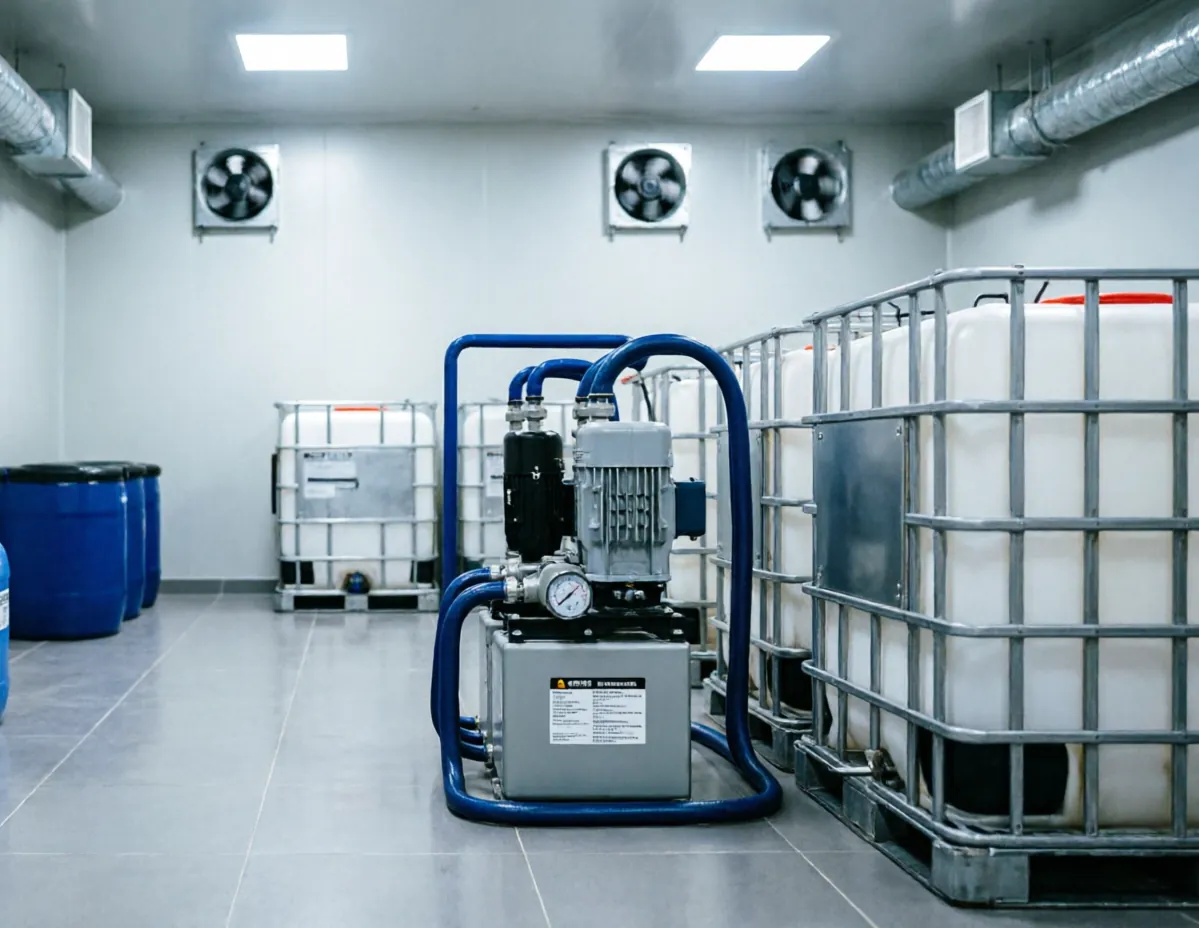
Water Treatment Chemicals
Chemistry Designed for the System.
A treatment chemical is not a product decision. It is the output of knowing what is in the water, what the system is made of, how hard it is being worked and what has to be protected.
01What It Solves
The Problem It Addresses.
Chemical treatment addresses the reactions a water system cannot avoid: minerals coming out of solution as scale, metal surfaces losing material to corrosion, and biological populations establishing themselves wherever water is warm, nutrient-rich and slow-moving.
02How It Works
How It Actually Works.
- 01
Scale control
Threshold inhibitors interfere with crystal growth so that sparingly soluble salts stay dispersed above their normal saturation point. Dispersants keep the resulting particles mobile so they leave with the blowdown instead of settling on the hottest surface.
- 02
Corrosion control
Inhibitors form a thin protective layer at the metal surface — anodic, cathodic or film-forming depending on chemistry and metallurgy. The layer has to be established and then maintained; interrupted dosing can leave a system less protected than no programme at all.
- 03
Microbiological control
Oxidising and non-oxidising biocides limit planktonic and sessile populations. Biofilm matters more than free-floating count: an established film insulates heat-transfer surfaces and shelters the organisms underneath it from the biocide.
- 04
Programme design
The individual chemistries have to work together. An inhibitor that performs at one pH may be ineffective at another; an oxidising biocide can degrade an organic inhibitor. Programme design is where those interactions are resolved.
03Applications
Where It Is Used.
- Open recirculating cooling systems
- Closed loop heating and chilled water
- Steam boilers and condensate return
- RO and membrane pretreatment
- Process and effluent treatment
04Technology Partner
Kurita Europe
Chemistry only performs against the system it was chosen for. C-Water carries out the water analysis, matches the programme to the metallurgy, cycles and duty on site, and keeps verifying the result once the programme is running.
Explore the partnershipRelated Solutions
Related Products
Related Services
Related Knowledge
Is this the right technology for your system?
That question is answered by the water analysis and the operating conditions, not by a catalogue. Start there.